Assassin Build Fundamentals
Assassin rewards clean positioning more than almost any other DPS class. A strong build turns its high-risk melee kit into repeatable burst windows instead of a scramble behind every boss or opponent.
The class uses dual daggers, mobility tools, stealth, and rapid multi-hit attacks. Its defining goal is to generate Insignias, stay at the target’s rear, then spend those stacks with Insignia Explosion while major buffs are active. Missing rear attacks or committing during an unsafe mechanic hurts both damage and survival.
| Strength | Why it matters | Main limitation |
|---|---|---|
| Burst damage | Critical hits, rear attacks, and Insignia Explosion create powerful short damage windows. | Damage falls sharply when forced away from the target’s rear. |
| Mobility | Shadowstrike, Flash Slice, and other movement tools help chase targets or reposition. | Reckless movement can place you in lethal mechanics. |
| Sustained resources | Quick Slice restores MP while contributing to the rotation. | Resource spending can become awkward if the rotation is interrupted. |
| Flexible control | Stealth and crowd-control options create strong PvP openings. | Low defenses punish missed dodges and poor timing. |
For PvE, prioritize a reliable cycle over chasing every possible button. Keep Quick Slice active for its MP return and Insignia Explosion cooldown reduction, generate stacks through Savage Roar and other attacks, then spend at five stacks whenever possible.
Your default combat flow should look like this:
- Reach the rear with Shadowstrike or ordinary movement when it is safe.
- Build Insignias through Savage Roar, Quick Slice, and applicable rear attacks.
- Activate Swift Contract and Illusive Clone during a stable boss damage window.
- Trigger Heart Gore when its critical-hit condition is ready.
- Use Insignia Explosion at high stacks before they expire.
- Save an evasive or defensive option for unavoidable danger rather than spending every mobility skill offensively.
Quick Slice is especially valuable because it supports the whole loop instead of serving as filler. Its upgrades can improve multi-hit behavior, reduce Insignia Explosion cooldown, and later help attacks bypass Block and Evasion on critical hits.
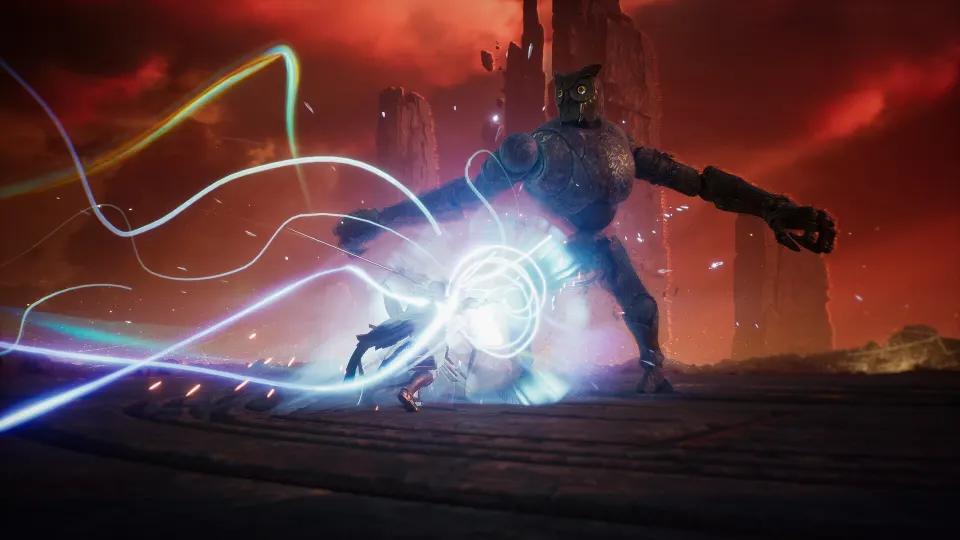
PvE Heart Gore and Insignia Setup
The standard dungeon setup centers on Heart Gore, Illusive Clone, and efficient Insignia spending. It performs best when a boss stays accessible long enough for you to remain behind it and align cooldowns.
| PvE priority | Recommended choice | Purpose |
|---|---|---|
| Core damage skill | Heart Gore | Delivers major triggered damage and provides sustain through its lifesteal effect. |
| Burst amplifier | Illusive Clone | Adds extra damage and can remove Heart Gore’s cooldown during its effect. |
| Speed buff | Swift Contract | Improves Combat Speed for faster, smoother skill flow. |
| Stack spender | Insignia Explosion | Converts built Insignias into a major burst hit. |
| Stack support | Quick Slice | Restores MP and reduces Insignia Explosion cooldown through its specialization. |
A practical four-Stigma PvE arrangement is Illusive Clone, Swift Contract, Savage Fang, and Triniel’s Dagger. Savage Fang helps accelerate Insignia generation, while Triniel’s Dagger complements rear-oriented burst. If roots or slows regularly stop you from maintaining melee uptime, swap Triniel’s Dagger for Evasion Contract.
Skill levels matter because specializations unlock at skill thresholds rather than character level. Early investment should focus on the abilities you press constantly. Quick Slice is a particularly efficient target because its cooldown-reduction option improves the whole rotation.
| Skill or passive | Useful investment goal | Why prioritize it |
|---|---|---|
| Quick Slice | Level 12, then Level 16+ | Enables Insignia Explosion cooldown reduction and gains stronger critical utility. |
| Heart Gore | Level 16 | Improves its critical-trigger value and burst reliability. |
| Insignia Explosion | Level 16+ | Gains cooldown and multi-hit options for frequent high-stack spending. |
| Illusive Clone | Level 10 | Adds a Critical Damage Boost option and improves burst windows. |
| Exploit Weakness | Early passive priority | Supports Critical Hit and can increase Attack. |
| Rear Smite | High passive priority | Improves the payoff for consistent rear positioning. |
Do not blindly choose every damage-looking specialization. If Insignia Explosion returns before you can rebuild five stacks, a stack-preservation choice may outperform another multi-hit increase. Test against a target dummy or in repeated boss encounters and choose the option that keeps your actual casts strong.
Ambush can add damage and Defense Break value, but its brief stationary commitment may feel unsafe in demanding encounters. It is a reasonable addition when a boss is predictable; leave it out if it repeatedly causes missed mechanics or disrupts your movement.
Gear, Stats, and Progression
Gear should first make your hits connect and your character survive the content. Once Accuracy and health are adequate, build toward critical consistency, rear damage, and burst multipliers.
| Stat | PvE value | Notes |
|---|---|---|
| Critical Hit | Highest early offensive priority | Supports Heart Gore triggers and reliable burst. |
| Attack / Attack Power % | High | Scales the baseline of every damaging ability. |
| Combat Speed | High | Makes the rotation smoother and accelerates skill use. |
| Multi-Hit Rate | High | Excellent for a kit containing many multi-hit attacks. |
| Critical Damage Boost | High after reliable crits | Strengthens successful critical windows. |
| Back Attack Damage Boost | Situationally excellent | Best when you can consistently stay behind the target. |
| Accuracy | Required threshold stat | Do not sacrifice reliable hits for greedier damage rolls. |
| HP / Damage Resistance | Encounter dependent | Helps prevent deaths that erase all DPS. |
On weapons and vambraces, favor Weapon Damage Boost, Combat Speed, Attack, Critical-oriented stats, Precision, and Multi-Hit value. Armor can carry Attack, rear-damage options, Critical Damage Boost, and defensive utility such as Damage Resistance or Defense Break depending on the slot and encounter.
For Pantheon choices, Destruction, Death, Time, and Wisdom are strong offensive themes for an Assassin. Destiny can also support a PvE-focused setup. Choose cards for useful substats rather than filling a collection with mismatched effects; Pantheon progression is gradual, so efficient pieces have long-term value.
A simple progression plan is more effective than distributing every upgrade evenly:
- Raise Quick Slice, Heart Gore, and Insignia Explosion before niche abilities.
- Develop Exploit Weakness, Rear Smite, and Ambush Stance among your important passives.
- Get Illusive Clone to its useful Stigma breakpoint before spreading resources widely.
- Add defensive Stigmas or HP when learning difficult bosses.
- Replace temporary gear only when the new item improves relevant stats, not merely Gear Score.
Macros can reduce button strain, but they should not decide your positioning. Keep movement, Shadowstrike, defensive skills, and important burst cooldowns under direct control. A macro is most useful for repeatable filler sequences, while major cooldowns should be held for a boss vulnerability window.
PvP Stealth and Control Variant
PvP changes the build from predictable boss damage into an opening-and-escape game. You still want critical burst and Insignias, but survivability, control resistance, and mobility are much more important than maximizing a stationary damage cycle.
A strong PvP Stigma set uses Shadow Walk, Illusive Clone, Aerial Bind, and Evasion Contract. Shadow Walk creates an approach angle, Aerial Bind becomes more threatening against a target carrying five Insignias, and Evasion Contract can clear Slow and Root while restoring mobility.
Open from concealment when possible, then use Shadowstrike to close distance and attempt control. Flash Slice or Infiltrate can help apply Blind and reposition. Build Insignias before committing to Aerial Bind, then decide whether Insignia Explosion will secure the elimination or whether you need to disengage.
Prioritize HP, PvP Damage Tolerance, Status Effect Resist, Accuracy, and Evasion before stacking pure damage. Defiance is valuable as a control-break tool; use its Tenacity window to reset positioning instead of immediately re-entering every fight.
FAQ
What is the best aion 2 assassin build for PvE?
Use a Heart Gore and Insignia Burst setup built around Quick Slice, Heart Gore, Insignia Explosion, Swift Contract, and Illusive Clone. Prioritize rear attacks, Critical Hit, Combat Speed, Multi-Hit Rate, and burst timing.
Should Assassin always use Insignia Explosion at five stacks?
Five stacks are the preferred target because they maximize the burst payoff. If cooldown reduction makes the skill ready before stacks can be rebuilt, consider a specialization that preserves stacks or adjust the rotation.
Is Assassin difficult for new players?
Yes. Assassin has strong damage potential but demands rear positioning, quick reactions, and careful use of mobility. Start with a simpler PvE rotation, keep a defensive escape available, and add more advanced burst optimization as you learn encounters.
Which stats matter most for Assassin PvP?
Start with enough Accuracy to land attacks, then build HP, PvP Damage Tolerance, Status Effect Resist, and Evasion. Add Critical Hit and burst damage after your character can survive counterpressure.